CHAPTER 1
The First Mom
Sophia. Cianna. Noah. Brayden. Dinieke. Olwethu. Beah. Janco. Miane. These are only some of the names of the babies I found who had been injured or died during a nearly five-year investigation into ex-midwife Yolande Maritz-Fouchee.
Every mother in this story had photographs from the day it happened. Photos that were meant to capture the moment their babies came into the world. They were ordinary people doing what all of us do: taking pictures to remember an event that would never happen again. Creating memories to share for a lifetime.
Instead, the images became evidence – proof that something had gone horribly wrong.
These photos were the hardest part for me. They haunted me at night. They still do, six years later. There were so many of them. A newborn being resuscitated, fighting for its very first breath. A baby dressed in a frilly little outfit, but with tiny fingernails already turning purple. Mothers with tears running down their faces, holding their babies for what they knew would be the last time. Babies lying in neonatal intensive care units, connected to tubes and machines. Babies in coffins instead of cribs.
Every image carried its own weight. These were not abstract cases or statistics; these were real children. Each one told a story no parent should ever have to live through.
I remember staying up late, scrolling through them again and again, trying to make sense of how so many stories could look so similar. Different names, different families, different places, but the same patterns.
These are the images Yolande Maritz-Fouchee never posted on her social media. The birth stories that she never shared. The moments that didn’t fit the carefully curated version of herself she presented to the world. The smiling photos, the soft lighting, the language of ‘natural birth’ and ‘empowerment’ – none of that included these endings.
When I began this investigation in 2020, my own baby girl was just a year old. Pregnancy is bizarre. It changes everything overnight. There is literally another human living off you, growing inside your body. It’s both terrifying and mind-blowing. For some people it’s the moment they’ve been waiting for their whole lives.
Which is kind of how it was for me, when I finally decided I wanted a baby. I was a bit of a late bloomer when it came to adulting. I spent my twenties focused on my career, working and travelling. Then, in my early thirties I moved to New York to do a master’s in documentary filmmaking. In between all of that I seemed to keep dating the wrong guys. So, after a lot of heartbreak and bad decisions, I was done with dating. But I wanted a child and I was heading to my forties, so I decided to do it alone.
I moved from Johannesburg to Cape Town, to live a more chilled-out life and focus on this baby I was planning. It was a great season – lots of hot yoga, meditation, vegan bowls and an overpriced mindfulness course. Eventually, I was ready. I went to a local fertility clinic and started the journey.
A best friend offered to be my sperm donor, but opting to use an anonymous donor from an official sperm bank is something I am grateful for in retrospect. Being a parent, I can now see how complicated that could have become. After reviewing nineteen donor profiles, I chose my particular donor for many reasons, including that he seemed kind, and gentle in the way he spoke about life.
I knew I wanted a child, there was no doubt, but when I got the call to say the blood test had come back positive, I remember blurting out, ‘Please tell me you’re joking. Shit, I can’t do this.’ To which the receptionist at the fertility clinic very politely replied, ‘This is Tarryn Crossman, correct?’, as if to say, you do realise coming here for artificial insemination was a choice.
Once the initial panic had settled, it became one of the most profound experiences of my life. It’s the best love story, really. You grow together for nine months. Your body reshapes itself to make space for this tiny person who is about to change you forever. You eat together, sleep together, cry together, laugh together. You’re together all the time. You imagine their face before you’ve even seen it. While they’re still tucked safely inside you, you’re already picturing who they will become, what kind of human they’ll be, whether they will be kind, brave, stubborn, gentle. Whether they’ll change the world. Because every mother believes her child will change the world, right?
But before any of that, you have to get them out. And that part is terrifying. Exhilarating, yes, but mostly terrifying, if we’re being honest.
So many of the mothers in this story were first-time moms, just like I was. Nervous. Hopeful. Trying to do everything ‘right’. And completely at the mercy of the medical professional they trusted to guide them through the most vulnerable moment of their lives. The person they believed would keep them and their babies safe.
Just before my daughter Willow’s birth, I moved back to Johannesburg and bought an amazing home in Parkhurst with pressed ceilings and jasmine growing on the walls. I ran my production company, TIA Productions, from the outside flat/pool room. My focus had shifted slightly though, from careerwoman to mother raising a daughter. I pulled back from producing independent documentaries and focused on shorter, current affairs stories; this helped me, as a single parent, to find some form of balance, if there is even such a thing in the film industry. When Willow was three months old, I took her on her first shoot, strapped to my chest with a blanky over her head for naps. I would breastfeed her in edits and limited all travel. I was very clear that she came first, but I was just as committed to my work; I simply changed the way I worked.
As a new mom working for Carte Blanche, the well-known and long-running current-affairs programme on M-Net, I very quickly became known as the producer who focused on investigations centred on women and children. It was during this time that I got an unexpected phone call from an advanced midwife making some damning allegations about a fellow midwife who was allegedly operating outside her scope of practice and putting her patients’ lives at risk. The caller said that there may be multiple injured and dead babies involved and asked if Carte Blanche would please investigate. She was clearly distressed and asked to remain anonymous. ‘I don’t want her threatening me or my family,’ she said. ‘Every time someone speaks out, she threatens them, but they all know – including the South African Nursing Council (SANC), and they are not doing a damn thing to stop it.’ The SANC is the statutory body responsible for governing all nurses and midwives. To practise nursing or midwifery in South Africa, you must be registered with the SANC.
At the time I had a small baby and not much capacity. This sounded like a complicated medical investigation, with not a lot of available evidence or people willing to talk. So initially, in my head, I decided it wasn’t something I could take on. But I asked her to come back to me if she found any mothers who were willing to speak to me, half expecting never to hear from her again.
However, a few weeks later, I got a text from a Carien Möller. She was a mother, she told me. Our daughters were the same age, but our journeys to that moment couldn’t have been more different. All she had wanted was to bring her baby into the world in the most natural, non-invasive way possible. We spoke the same language about natural birth, the desire to own that space as women, to let our babies come into the world calmly, without the chaos of a hospital. As Carien poured her heart out to me, I knew I had to do something. I had no idea yet how big the story was, or how many babies were involved, but I knew I believed her. I couldn’t leave it there. So, I started investigating Yolande Maritz.
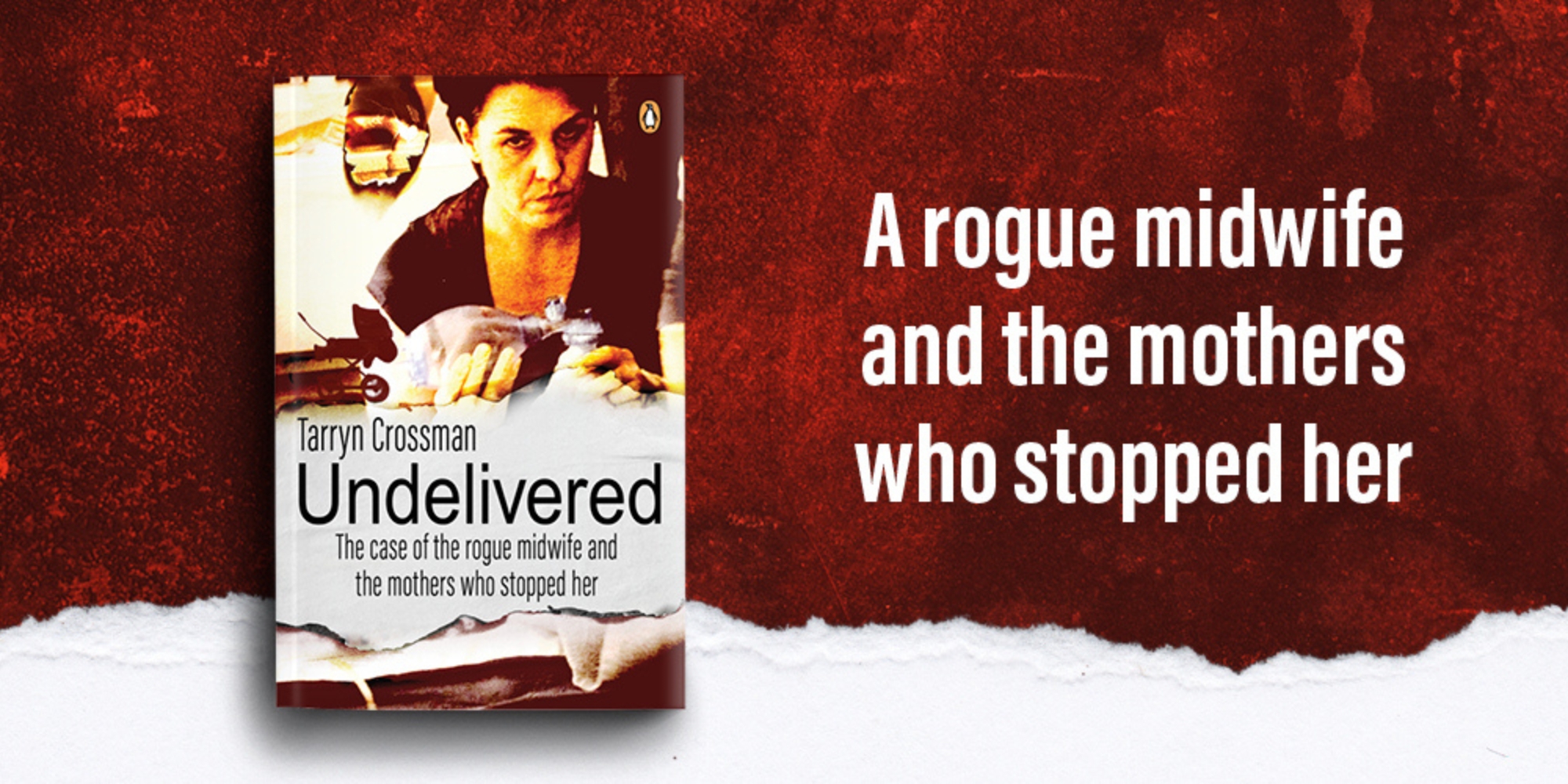
Extracted from Undelivered by Tarryn Crossman, out now.