




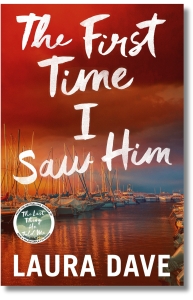
A text from an unknown number shatters Hannah’s life. It’s from Owen,
her husband who vanished five years ago, abandoning her and their
daughter, Bailey. Hannah saw him the night before—silent, watchful—
and knows they’re now in danger. With no time to explain, she takes
Bailey and flees Los Angeles, driving north along hidden coastal roads
while questioning why Owen has returned and who might be hunting
them. Their escape leads to Paris, the city where Hannah and Owen
once honeymooned. It should mean safety, but instead it draws them
closer to secrets, old enemies, and a reckoning long overdue.
Prologue
I’m at the Pacific Design Center in Los Angeles, participating in a First Look exhibition, with twenty-one other artisans and producers. I’m debuting a new collection of white oak pieces (mostly furniture, a few bowls and smaller pieces) in the showroom they’ve provided.
These exhibitions are great for exposure to potential clients, but they are also like a reunion of sorts—and, like most reunions, somewhat of a grind. Several architects and colleagues stop by to say hello, catch up. I have done my best with the small talk, but I’m starting to feel tired. And, as the clock winds toward 6 p.m., I feel myself looking past people as opposed to at them.
Bailey is supposed to meet me for dinner, so I’m mostly on the lookout for her, excited to have the excuse to shut it all down for the day. She is bringing a guy she recently started dating, a hedge funder named Shep (two points against him), but she swears I’ll like him. He’s not like that, she says.
I’m not sure if she is referring to him working in finance or having the name Shep. Either way, he seems like a reaction to her last boyfriend, who had a less irritating name (John) and was unemployed. So it is, dating in your twenties, and I’m grateful that these are the things she’s thinking about.
She lives in Los Angeles now. I live here too, not too far from the ocean—and not too far from her.
I sold the floating house as soon as Bailey graduated high school. I don’t harbor any illusions that this means I’ve avoided them keeping tabs on us—the shadowy figures waiting to pounce should Owen ever return. I’m sure they are still watching on the off chance he risks it and comes back to see us. I operate as if they are always watching, whether or not he does.
Sometimes I think I see them, in an airport lounge or outside a restaurant, but of course I don’t know who they are. I profile anyone who looks at me a second too long. It stops me from letting too many people get close to me, which isn’t a bad thing. I have who I need.
Minus one.
He walks into the showroom, casually, a backpack over his shoulders. His shaggy hair is buzz cut short and darker, and his nose is crooked, like it’s been broken. He wears a button-down shirt, rolled up, revealing a sleeve of tattoos, crawling out to his hand, to his fingers, like a spider.
This is when I clock his wedding ring, which he is still wearing. The ring I made for him. Its slim oak finish is perhaps unnoticeable to anyone else. I know it cold though. He couldn’t look less like himself. There is that too. But maybe this is what you do when you need to hide from people in plain sight. I wonder. Then I wonder if it isn’t him, after all.
It isn’t the first time I think I see him. I think I see him everywhere.
I’m so flustered that I drop the papers I’m holding, everything falling to the floor.
He bends over to help me. He doesn’t smile, which would give him away. He doesn’t so much as touch my hand. It would be too much, probably, for both of us.
He hands me the papers.
I try and thank him. Do I say it out loud? I don’t know.
Maybe. Because he nods.
Then he stands up and starts to head out, the way he came. And it’s then that he says the one thing that only he would say to me.
“The could have been boys still love you,” Owen says. He isn’t looking at me when he says it, his voice low.
The way you say hello.
The way you say goodbye.
My skin starts burning, my cheeks flaring red. But I don’t say anything. There’s no time to say anything. He shrugs and shifts his backpack higher on his shoulder. Then he disappears into the crowd. And that’s that. He is just another design junkie, on his way to another booth.
I don’t dare watch him go. I don’t dare look in his direction.
I keep my eyes down, pretending to organize the papers, but the heat coming off me is tangible—that fierce red lingering on my skin, on my face, if anyone is paying close enough attention in that moment. I pray they are not.
I make myself count to a hundred, then to a hundred and fifty.
When I finally allow myself to look up, it’s Bailey that I see. It cools me out immediately, centers me. She is walking toward me from the same direction Owen has gone. She’s in her gray sweater dress and high-top Converse, her long, brown hair running halfway down her back. Did Owen pass her? Did he get to see for himself how beautiful she has become? How sure of herself? I hope so. I hope so at the same time I hope not. Which way, after all, spares him?
I take a deep breath and take her in. She walks hand in hand with Shep, the new boyfriend. He gives me a salute, which I’m sure he thinks is cute. It isn’t.
But I smile as they walk up. How can I not? Bailey is smiling too. She is smiling at me.
“Mom,” she says.
“On the way to the lounge’s bar, he sees a janitor with her large garbage bin and tosses his old clothes inside. Then he takes a seat on the corner barstool.”
Part I
For whatever we lose (like a you or a me) It’s always ourselves we find in the sea
—e. e. cummings
If You Can Forgive Me …
On the way out of the Pacific Design Center, Owen passes her.
This is the first time he has laid eyes on his daughter in person in more than five years. Five years, ten months, and twenty-four days—to be exact. Five birthdays and five Christmases and eight performances (Wicked and Carousel and Spring Awakening and Dear Evan Hanson and Waitress and Beautiful and Chicago and Carousel again) and two graduations (one high school, one college) and three new addresses and a summer in Williamstown, Massachusetts, and the start of her first job. All these things between sixteen and twenty-two that mark it up, the start of a life.
Bailey’s hair is longer, her arms too thin. But, at the moment he passes her—he doesn’t turn to take a longer look; he won’t allow himself that luxury—it’s her skin that gets him.
Bailey is tan, if her skin were capable of tanning, her skin freckled and reddish, perhaps from the daily toll of life in Southern California, perhaps from spending too many days at the beach. How is this possible? Hadn’t she always avoided the beach? It nearly breaks him, such a small and obvious difference in who his daughter has become.
Seeing Bailey online didn’t give this away. Seeing Bailey online was a completely different thing.
Her social media account is now public, which Owen tells himself she’s done for his benefit. He wouldn’t allow her to ever post photos before, but the rules are different now. Owen imagines that Bailey knows this. There is no asking her. Either way, he likes to believe the posts are a way of keeping them in conversation. All he needs is a public computer and her handle and he can go to her page with no record of having gone there. Her smile (how he loved every single thing about his kid’s smile) knocks the wind out of him, each and every time. It’s almost like it’s directed at him: Look, Dad, I’m okay. Look, Dad, you’re not here. Look, Dad, I’ll never forgive you.
Owen walks through the design center lobby, out the revolving doors, and onto Melrose. There is a line of taxis idling. The driver in the first taxi shakes his head, still in the middle of a dinner break. So Owen gets into the second cab and asks the driver to take him to the airport. They are fighting early-evening Los Angeles traffic and it takes longer than expected to get there. It doesn’t matter. He is plenty early for his flight and heads to the first-class lounge, flashes his mobile boarding pass, and goes into a single bathroom, where he locks the door.
He stares at himself in the mirror, takes his first deep breath. Steadies himself. Then he starts to take his clothes off. He strips off the button-down shirt he was wearing, puts on a plain T-shirt and leather jacket, swaps his combat boots for a pair of Converse sneakers. Just like his kid’s.
On the way to the lounge’s bar, he sees a janitor with her large garbage bin and tosses his old clothes inside. Then he takes a seat on the corner barstool, the farthest stool from anyone else, taking out a novel he has no intention of reading.
The bartender puts a wine list down in front of Owen. “What can I get you to drink?” he asks.
“Whatever red you’re pouring is fine.”
“That’s a mistake,” a woman says.
Owen looks up, sees the woman at the other end of the bar, smiling at him. She is pretty, with a short pixie cut, tortoiseshell glasses.
“Sorry?” he says.
“The wine. It’s a mistake. My flight’s delayed. Very delayed. So I’ve been working my way down the list of wines by the glass. They’re all bad.”
He opens his novel, tries to close off whatever conversation she wants to have.
But she moves down the bar, so she’s two stools away from him. “So where are you headed?”
“Business trip,” he says.
“International?”
He’s not surprised she guesses international. His New Zealand passport is sticking out of his book, complete with a name that doesn’t belong to him.
The bartender puts down the glass of wine in front of him along with a bowl of salty nuts. Owen nods a thank-you, takes a sip.
“Awful, isn’t it?”
“It’ll do.”
He offers a quick smile, turns back to his book.
“Should we try our luck at a bottle instead?”
“The thing is …” he says. “I’m married.”
She looks down at his hand, eyes his wedding band. “And what does that have to do with splitting a bottle of wine?”
But then she shrugs, as if to say she knows exactly what that has to do with it.
“Just trying to avoid any confusion,” Owen says.
“Lucky woman then. Your wife.”
He thinks of Hannah. He hasn’t allowed himself to think of her, not since leaving the design center. Not since he was bending down next to her on the floor, helping pick up those scattered papers. Her hand so near to his hand. Her hair against his face. Her eyes giving her away, like they always had. There was anger there. And confusion. And love. Was there still love beneath the rest?
He smiles. “Not sure that she would say that.”
“What would she say? Your wife?”
“I ask myself that all the time.”
Extracted from The First Time I Saw Him by Laura Dave, out now.


YOU MAY ALSO ENJOY
Extract: Gone Before Goodbye by Reese Witherspoon and Harlan Coben
Maggie McCabe is on the edge. A renowned army combat surgeon, she’s always lived on the frontline, but a string of personal tragedies leaves her adrift.